
A 12-Risk Go-Live Worksheet for an AI Agent
NIST AI 600-1 names twelve generative AI risks. File an owner, evidence and residual-risk acceptance for each before a tool-calling agent goes live.
Blog / Topic
How policy-driven agents enforce rules, keep audit trails, and earn autonomy.
NIST AI 600-1 names twelve generative AI risks. File an owner, evidence and residual-risk acceptance for each before a tool-calling agent goes live.

Edit distance, how much reviewers change agent output, is the honest metric for expanding AI agent autonomy, and why accuracy alone is not enough.
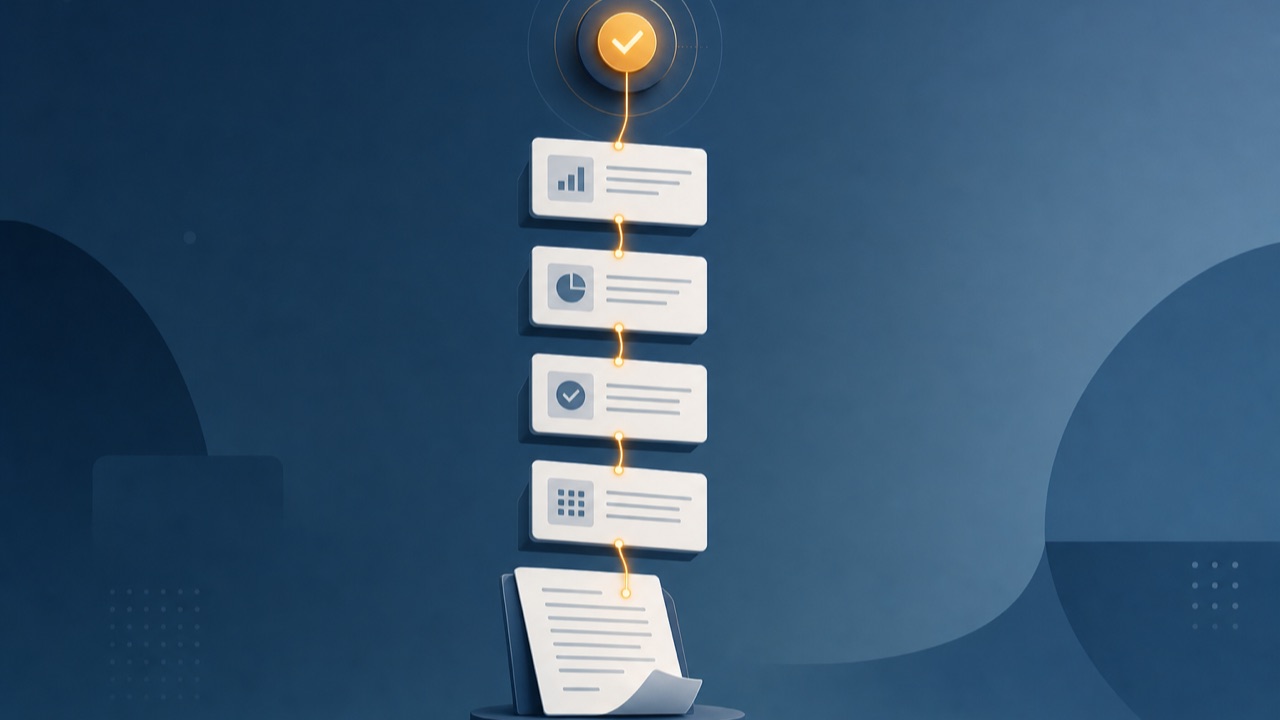
A why-trail connects every AI agent decision to its policy version, source evidence, evaluated data, timestamps, final outcome, human review, and overrides.

Policy profiles let one AI workflow apply rules by jurisdiction, counterparty, or product while preserving auditability and avoiding duplicated workflows.

Non-human identity management governs agent credentials for enterprise systems through least privilege, rotation, revocation, and identity-aware audit trails.

An AI agent operating model defines policies, human escalation, audit evidence, feedback, identity, and the path from supervised work to greater autonomy.

AI agent governance turns policies, evidence, access controls, versioning, and review paths into the trust needed for higher-value production workflows.

Progressive autonomy lets AI agents earn independence through performance data, human review, policy controls, and reversible Audit, Assist, and Automate modes.

SOC 2 is only a baseline for AI agent security. CISOs should assess tenant isolation, policy governance, evidence, prompt injection, and autonomy controls.

Non-human identities (NHIs) let AI agents access systems. Learn how least-privilege access, credential rotation, and audit trails support regulated workflows.

Deterministic AI produces consistent, auditable outputs from probabilistic models. How policy layers create the reproducibility regulated teams need.

AI agent guardrails constrain access, decisions, and actions with policies, permissions, validation, human review, and audit logs for regulated workflows.