Use Cases
Commodity Position-Limit & Hedge-Exemption Screening
What is commodity position-limit and hedge-exemption screening?
Commodity position-limit and hedge-exemption screening is a CFTC pre-screen that compares the labeled futures-equivalent of a labeled aggregation group to the frozen federal spot-month cell for that contract, then locks one official outcome: in-limit, allow as hedge, over-limit deny, or refer non-enumerated. The first surface is federal spot-month limits on core wheat and natural-gas contracts. Policies are written in plain English and compiled into deterministic execution, and every check keeps a cite, the observed value versus the threshold, and an evidence pointer.
The Problem
Federal speculative spot-month limits are the hard ceiling on a wheat or natural-gas book. The desk still has to compare the labeled futures-equivalent of the labeled aggregation group to the frozen cell for that contract, then decide whether a hedge claim can carry an over-limit book. Wheat contracts stay separate. Natural-gas physical, cash-settled, and economically equivalent swaps are never netted.
When that work is manual, over-limit files sit while someone re-checks the cell. Vanilla inventory hedges wait behind claims that need a reviewer. Missing blotter or futures-equivalent still gets a pass. Dispositions go out without the cite, the observed value, or the evidence pointer. Policies written in plain English and compiled into deterministic policy evaluation close that gap for the over-limit desk.
Over-limit backlog
Books sit on the desk while someone re-checks the spot-month cell
Mixed hedge files
Vanilla inventory hedges wait behind claims that need a reviewer
Contract mixing
Wheat books get collapsed; natural-gas buckets get netted
Thin evidence
Missing blotter or futures-equivalent still walks through as a pass
Missing audit trail
Dispositions go out without the cite, the observed value, or the pointer
How MightyBot Executes
-
Ingest
Packet ingested: blotter, labeled aggregation group, labeled futures-equivalent, inventory, fixed-price purchase or sale contracts, and a recognition letter when one is claimed.
-
Compare
Labeled futures-equivalent of the labeled aggregation group compared to the frozen spot-month cell for that contract. Wheat contracts stay separate. Natural-gas physical, cash-settled, and economically equivalent swaps are never netted.
-
Match
Vanilla same-commodity inventory and fixed-price purchase or sale hedges can allow an over-limit book when quantity-match holds. Other hedge claims stay open for a human.
-
Decide
One locked official outcome: in-limit, allow as hedge, over-limit deny, or refer non-enumerated. Missing required evidence fail-closes to deny. A leftover hedge claim does not block an in-limit book.
-
Memo
Exemption memorandum with each check, 17 CFR cite, observed versus threshold, and evidence pointer. Exportable audit trail the over-limit desk can defend.


Use-case map
How Commodity Position-Limit & Hedge-Exemption Screening works in MightyBot
MightyBot pre-screens commodity books against federal spot-month position limits and hedge-exemption evidence, locking one official outcome with an exemption memorandum and audit trail.
| Inputs | Position blotter, labeled aggregation group, labeled futures-equivalent, cash inventory, fixed-price purchase or sale contracts, natural-gas settlement bucket, and a recognition letter when a non-enumerated hedge is claimed. |
|---|---|
| Execution | Compares the labeled futures-equivalent to the frozen spot-month cell for that contract, tests vanilla same-commodity inventory and fixed-price hedges, fail-closes on missing evidence, and leaves non-enumerated and appropriateness questions open for a reviewer. |
| Outputs | One locked disposition (in-limit, allow as hedge, over-limit deny, or refer non-enumerated), an exemption memorandum, and an exportable audit trail. |
| Audit trail | Every check records the 17 CFR cite, evidence pointer, observed value, threshold, result, and whether a rule or a reviewer computed it. |
| Best for | Over-limit desks that need a locked outcome and a defendable trail on wheat and natural-gas spot-month books. |
Over-limit desks and hedge-exemption files need a locked outcome and a memorandum the desk can defend. Agents on the MightyBot platform screen the packet against the spot-month cell and the hedge evidence, then leave the cite trail behind.
Before vs After
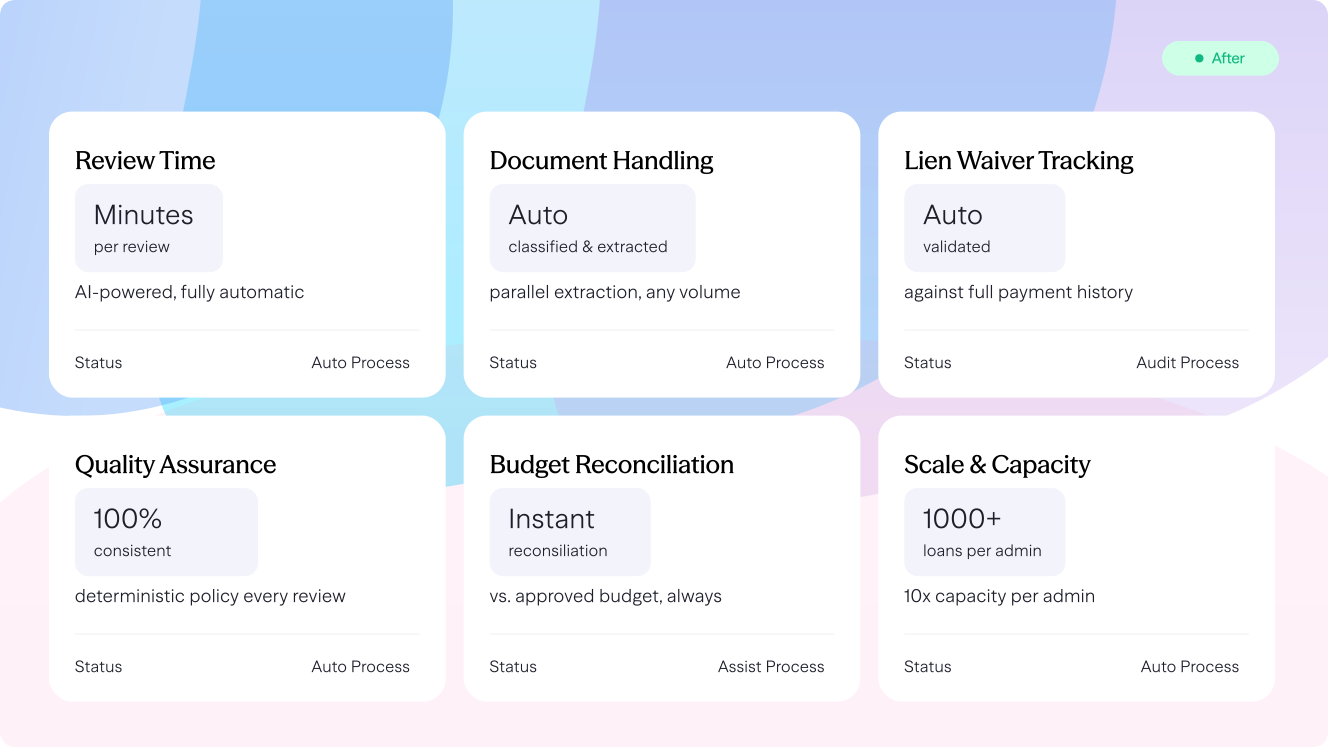
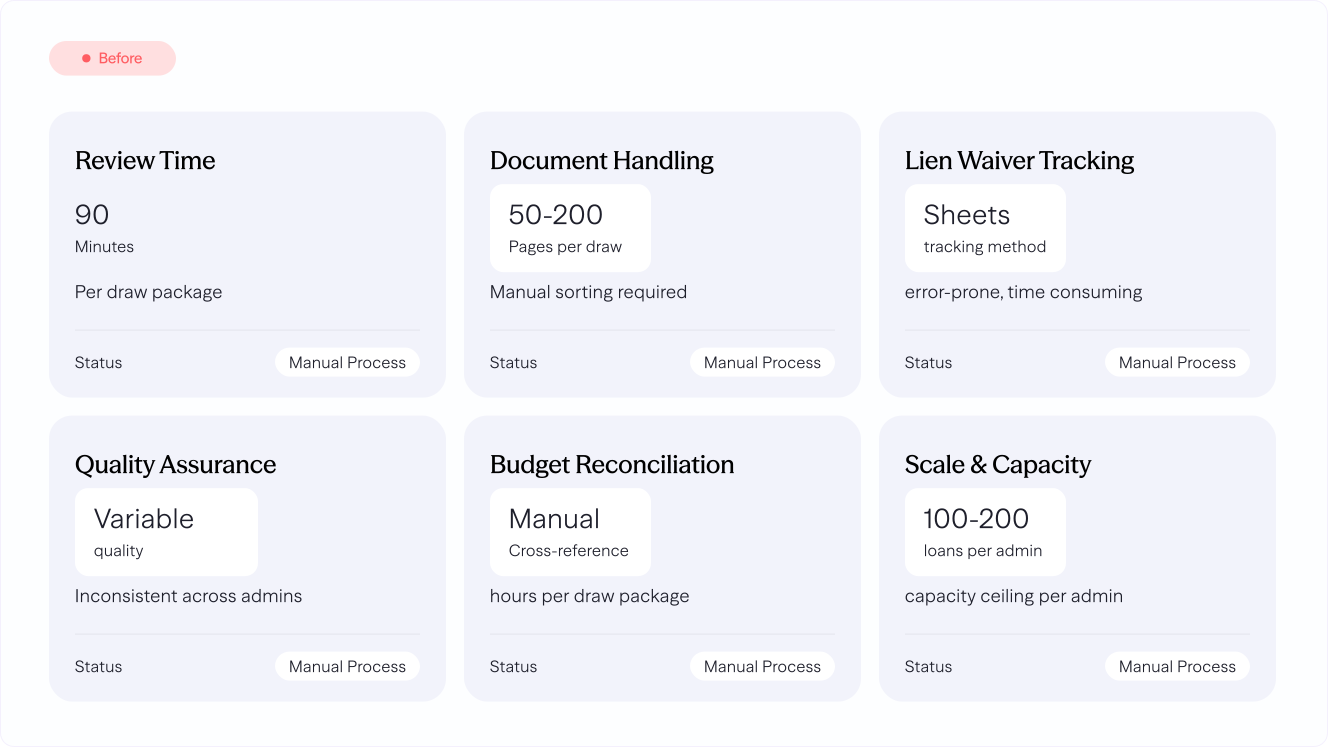
One locked outcome per packet.
A memorandum the over-limit desk can defend.
AI for the work that can't be wrong.
FAQ
Frequently Asked Questions
What is commodity position-limit and hedge-exemption screening?
It is a CFTC pre-screen of a trading packet against federal speculative spot-month limits. The agent on the MightyBot platform compares the labeled futures-equivalent of the labeled aggregation group to the frozen cell for that contract, then locks one official outcome and writes the exemption memorandum. The first surface is core wheat and natural-gas contracts.
What does the agent do?
The agent ingests the packet, compares the labeled futures-equivalent to the frozen spot-month cell, tests vanilla same-commodity inventory and fixed-price hedges when the book is over the cell, and copies the locked outcome into an exemption memorandum and an exportable audit trail. Reviewers still close the judgment questions: economic appropriateness, the physical marketing channel, and non-enumerated recognition.
What stays outside this pre-screen?
The screening does not issue a Commission order, recognize a new hedge strategy, run hedge accounting, look up live exchange or CFTC portal files, or decide who must be aggregated. Those questions stay outside this pre-screen.
What is the difference between in-limit, allow as hedge, over-limit deny, and refer non-enumerated?
The official outcome is one of four codes: ALLOW-IN-LIMIT (in-limit), ALLOW-AS-HEDGE (allow as hedge), DENY-OVER-LIMIT (over-limit deny), or REFER-NON-ENUMERATED (refer non-enumerated). In-limit means the labeled futures-equivalent is at or under the frozen spot-month cell. Allow as hedge means the book is over the cell and a vanilla same-commodity inventory or fixed-price hedge quantity-match holds, or a current recognition of this strategy is on file. Over-limit deny means required evidence is missing or the book is over the cell with no hedge that can fire. Refer non-enumerated means the book is over the cell and a hedge claim still needs a human.
Why do some hedge claims stay with a reviewer?
Vanilla same-commodity inventory and fixed-price purchase or sale hedges can allow an over-limit book when quantity-match holds. Claims that ask whether the hedge is economically appropriate, whether it sits in a physical marketing channel, or whether a non-enumerated strategy should be recognized stay open for a human. Quantity-match does not close those questions.
What does the exemption memorandum and audit trail include?
Each check carries a 17 CFR cite, the observed value versus the threshold, and an evidence pointer. The exportable audit trail records who computed the result, rule or reviewer, so the over-limit desk can defend the file.
How are the screening policies written?
Policies are written in plain English on the MightyBot platform and compiled into deterministic execution. The desk authors the cell, the hedge tests, and the fail-closed evidence rules in the language examiners already use.
What happens when required evidence is missing?
Missing required evidence fail-closes to deny. A thin blotter, a missing futures-equivalent, or a conflicting inventory figure cannot produce an in-limit or allow-as-hedge outcome. A leftover hedge claim on an in-limit book does not block the in-limit result, because an exemption is not needed at or under the cell.