Use Cases
SBA 7(a) Eligibility Screening
What is SBA 7(a) eligibility screening?
SBA 7(a) eligibility screening is the pre-screen that decides whether a Standard 7(a) applicant meets SBA's core eligibility requirements. Agents on the MightyBot platform ingest the applicant packet, evaluate each gate against complete evidence, and emit one locked outcome — ELIGIBLE, INELIGIBLE, or REFER — with a lender memorandum and an exportable audit trail.
The Problem
Eligibility is a required first step on every Standard 7(a) file. The lender has to complete and document it as early as practicable. Analysts chase Form 1919, personal financial statements, tax transcripts, affiliation, and use-of-proceeds by hand, then write the memo.
Missing evidence gets treated as a later follow-up. Conflicting ownership percentages get resolved by feel. Thin credit-elsewhere write-ups pass. Files that should have been INELIGIBLE or REFER reach credit work anyway. Policies compiled from plain English close those gates the same way on every file.
Early determination
Every Standard 7(a) file needs a documented eligibility outcome before credit work starts
Incomplete evidence
Missing, stale, or conflicting documents still reach reviewers as maybe-eligible
Affiliation graph
Owners, look-throughs, and related businesses must be counted before size can be tested
Interacting gates
Size, ineligible types, use of proceeds, occupancy, and citizenship all have to hold
Thin judgment files
Credit-elsewhere memos that name no specific weakness stay open
How MightyBot Executes
-
Ingest
The Standard 7(a) packet is classified on arrival: Form 1919, Form 413, entity documents, tax returns and transcripts, use-of-proceeds budget, credit-elsewhere memorandum, and the rest of the required set.
-
Extract
Applicant, owners, affiliates, size inputs, uses, occupancy, citizenship, and tax-filing facts are extracted. Conflicting numbers are emitted as conflicts. They are not repaired.
-
Collate
The affiliation graph is built from ownership, look-through, and related-business rules. Size worksheets, occupancy math, and completeness flags are computed as predicates. The official outcome is written later, by policy.
-
Evaluate
Each SOP 50 10 8.1 eligibility gate runs as a policy compiled from plain English: operating and US location, affiliation, small-business size, ineligible types, use of proceeds and occupancy, citizenship, credit-elsewhere, and required Federal tax returns. Missing, unreadable, stale, or conflicting required evidence cannot produce ELIGIBLE.
-
Document
The agent writes the lender eligibility memorandum: each gate, SOP/CFR cite, observed versus threshold, evidence pointer. The audit trail is exportable. A reviewer cannot override a hard INELIGIBLE to ELIGIBLE.


Use-case map
How SBA 7(a) Eligibility Screening works in MightyBot
MightyBot pre-screens Standard 7(a) applicant packets against SBA eligibility gates and returns one locked outcome — ELIGIBLE, INELIGIBLE, or REFER — with a lender memorandum and an exportable audit trail.
| Inputs | Form 1919, Form 413, entity documents, SOS good standing, business tax returns and transcripts, interim financials, use-of-proceeds budget, credit-elsewhere memorandum, ownership and citizenship attestations, CAIVRS and OFAC results, and affiliate financials when required. |
|---|---|
| Execution | Classifies the packet, extracts applicant and ownership facts, builds the affiliation graph and size worksheet, evaluates SOP 50 10 8.1 eligibility gates compiled from plain English, and fail-closes on missing evidence. |
| Outputs | One locked disposition (ELIGIBLE, INELIGIBLE, or REFER), a lender eligibility memorandum, a request list for missing items, and an exportable audit trail. |
| Audit trail | Every gate records the SOP or CFR cite, evidence pointer, observed value, threshold, result, and whether a rule or a reviewer computed it. |
| Best for | 7(a) lenders that need a documented eligibility determination before credit work starts, with fail-closed evidence and examiner-ready trails. |
Eligibility pre-screening is fail-closed. Missing, stale, or conflicting required evidence cannot produce ELIGIBLE. Every gate keeps an evidence trail a reviewer can follow.
Before vs After
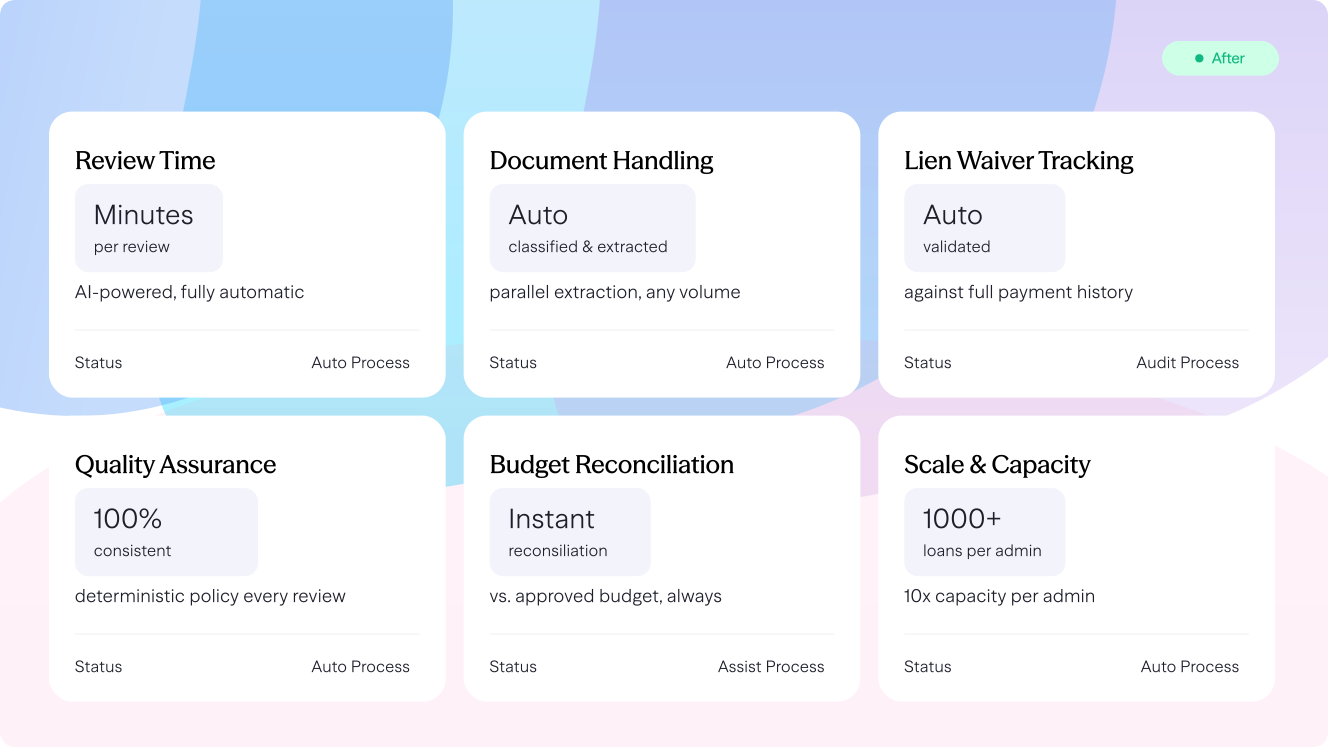
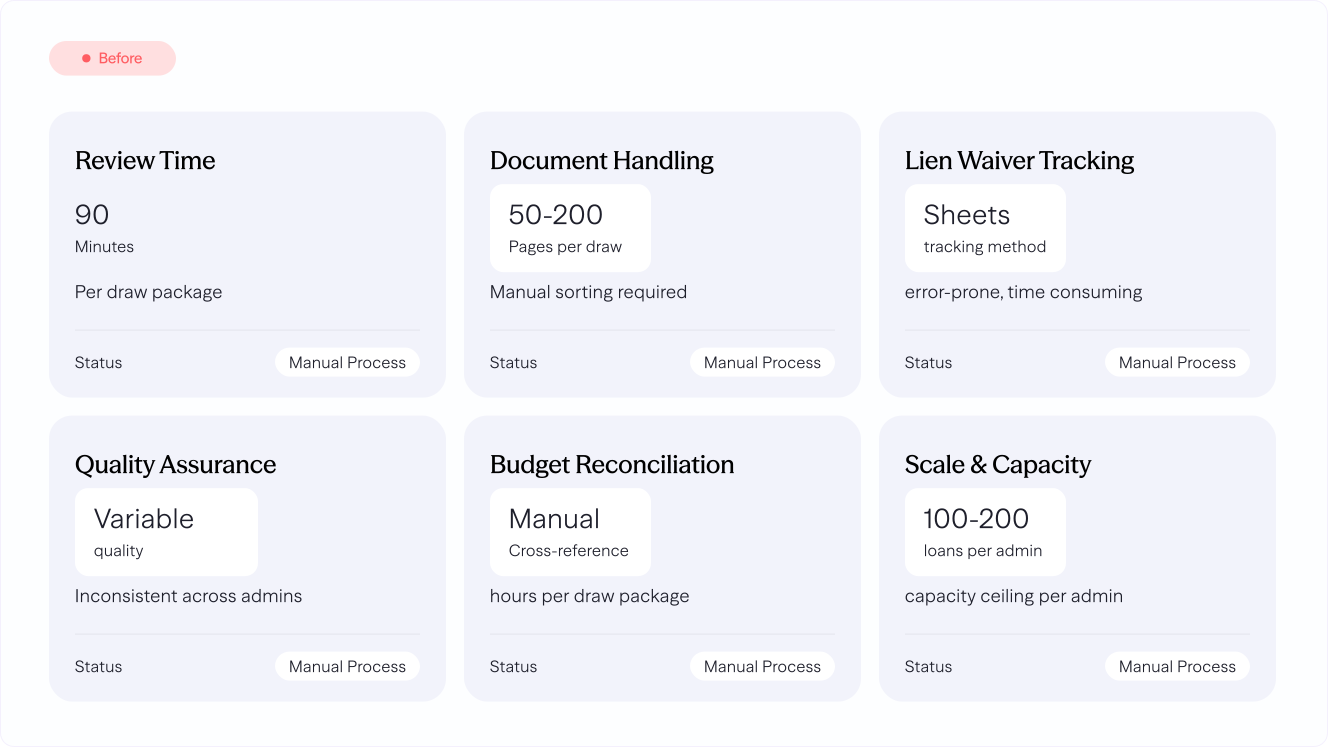
SBA 7(a) eligibility, documented early.
One locked outcome.
Every gate. Every evidence pointer.
FAQ
Frequently Asked Questions
What is SBA 7(a) eligibility screening?
SBA 7(a) eligibility screening is the pre-screen that decides whether a Standard 7(a) applicant meets SBA core eligibility requirements. Agents on the MightyBot platform evaluate the applicant packet against those gates and lock one official outcome: ELIGIBLE, INELIGIBLE, or REFER. Credit underwriting is a later step.
What does the eligibility agent do?
The agent classifies the Standard 7(a) packet, extracts the facts each gate needs, builds the affiliation graph and size worksheet, evaluates every eligibility gate, and writes a lender eligibility memorandum with SOP/CFR cites, observed versus threshold, and evidence pointers. The official outcome is written by policy and copied onto the memo.
Does MightyBot underwrite the 7(a) loan?
No. This is a pre-screen eligibility engine. The agent does not compute DSCR, collateral coverage, a credit score, or a risk rating, and it does not approve the loan. Those remain with the credit team.
What happens when required evidence is missing?
The screen is fail-closed. Missing, unreadable, stale, or conflicting required evidence cannot produce ELIGIBLE. A hard gate without its evidence fails, and the disposition is INELIGIBLE. A note that documents will arrive later is not a pass.
How does MightyBot evaluate affiliation and size?
The agent builds the affiliation graph from ownership, look-through, and related-business rules, then tests small-business size on the applicant plus affiliates. Size can pass on the alternative standard ($20 million tangible net worth and $6.5 million average net income) or on the industry size standard.
When is the outcome REFER instead of INELIGIBLE?
INELIGIBLE means a hard gate failed, or required evidence for a hard gate is missing, unreadable, stale, or in unresolved conflict. REFER means no hard fail, but a judgment gate cannot close from the packet. Thin credit-elsewhere memos stay REFER.
What does the audit trail include?
Each gate records its SOP or CFR cite, the evidence pointer, the observed value, the threshold, the result, and whether a rule or a reviewer computed it. The lender eligibility memorandum carries the same trail. A reviewer can send a file back for extract correction or mark REFER with a reason. A reviewer cannot override a hard INELIGIBLE to ELIGIBLE.
How are the eligibility policies written?
Policies are written in plain English and compiled into deterministic execution on the MightyBot platform. The SOP 50 10 8.1 gate set (G1–G8) covers operating status, affiliation, size, ineligible types, use of proceeds and occupancy, citizenship, credit-elsewhere, and required Federal tax returns. Every file runs the same compiled policies.