WHY MIGHTYBOT

Build vs. Buy an AI Agent Platform: Cost, Token Efficiency, and Production Risk

Compare the real cost of building production AI agents in-house: engineering capacity, token spend, governance, audit trails, and 12-18 month execution risk. MightyBot delivers regulated agent workflows in weeks with 4-5x more efficient token utilization.

Production AI Agent Economics

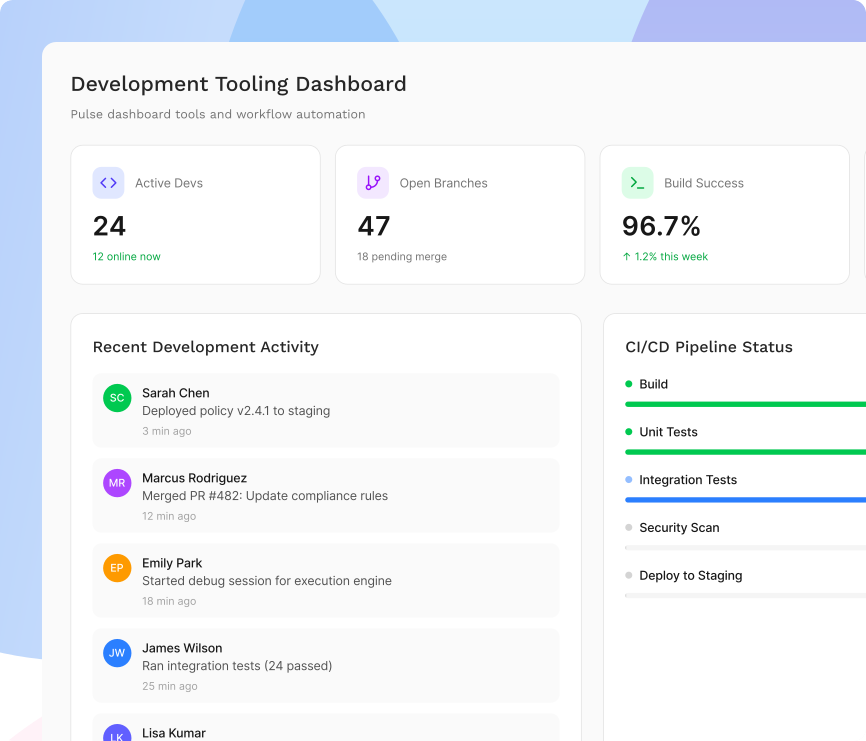
If the workflow is regulated, document-heavy, policy-bound, and high volume, buying a production AI agent platform is usually faster, cheaper, and lower risk than building internally. Internal builds require document intelligence, policy management, orchestration, evaluation, observability, integrations, security, and ongoing model governance. MightyBot provides those production layers in a reusable platform.

Should you build or buy an AI agent platform?

Every engineering team has the same instinct: we can build this ourselves. A proof of concept comes together in months. Then production happens, and the gap between a demo and an audit-ready operating system becomes clear: cost controls, policy execution, model upgrades, regression testing, human escalation, and system-of-record integration.

THE BUILD

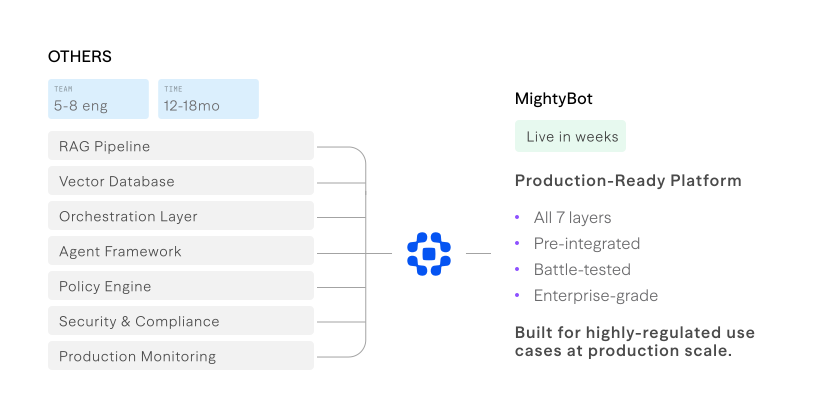
Seven Layers You Will Need to Build

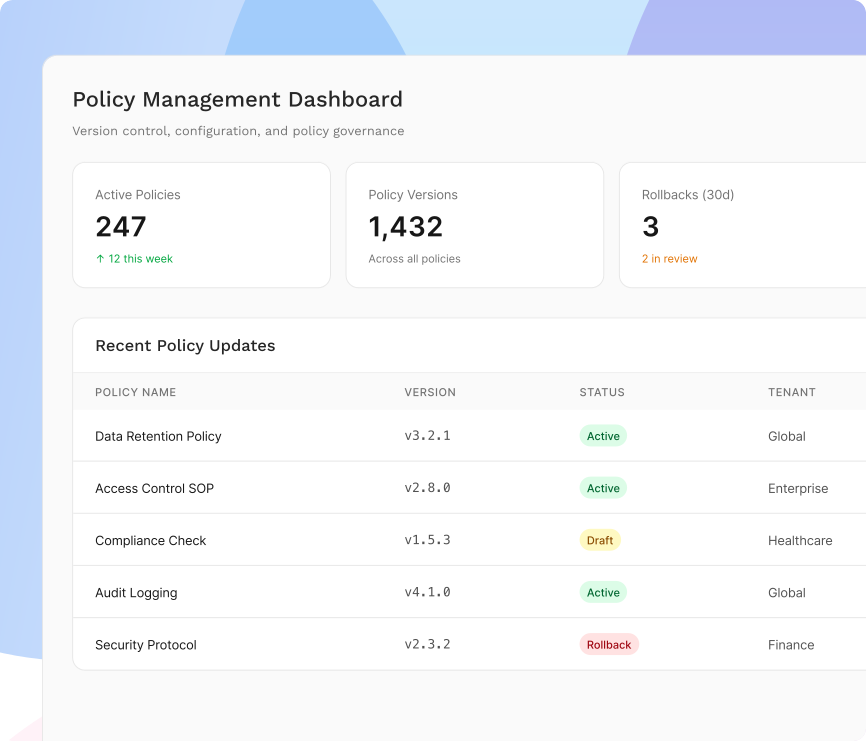
Policy Engine
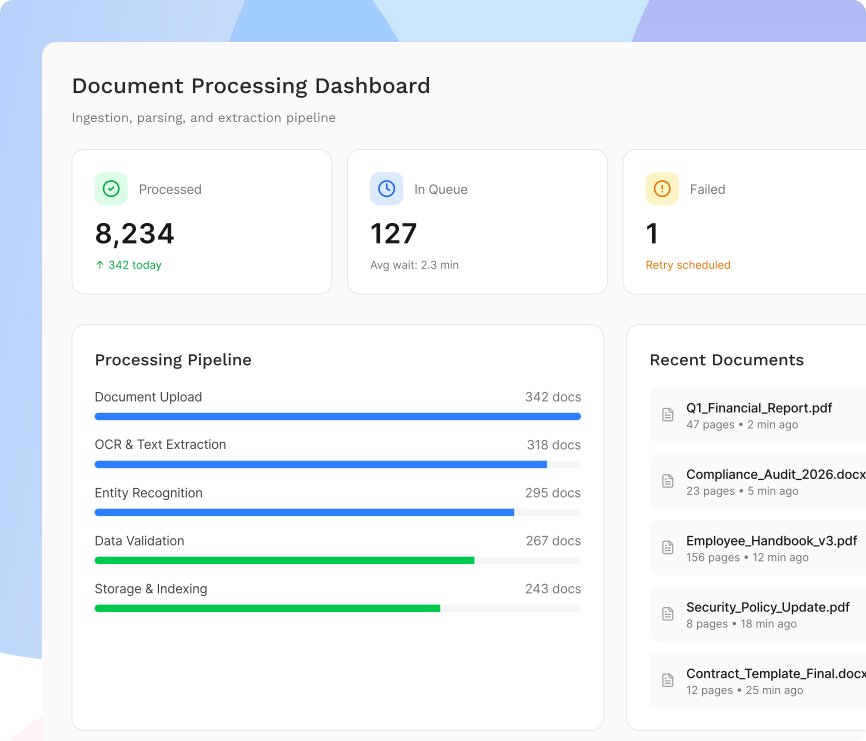
Document Intelligence
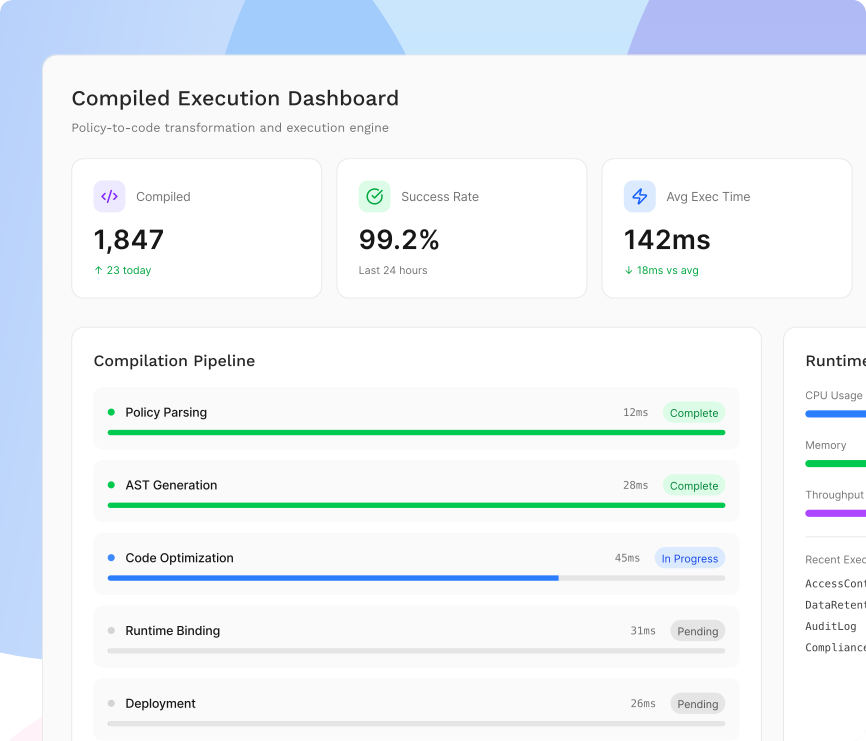
Compiled Execution
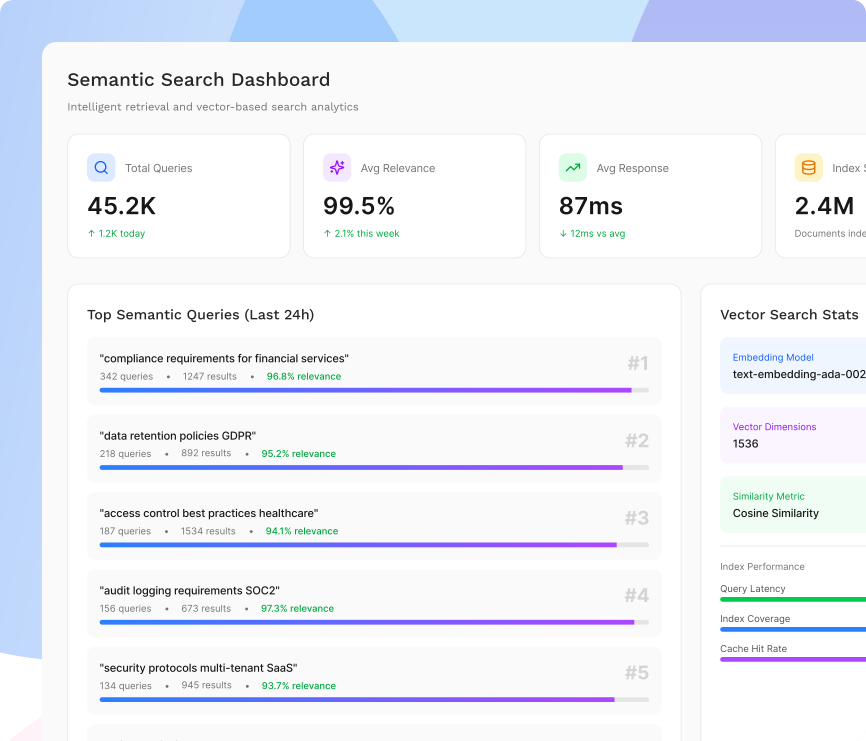
Retrieval & Memory
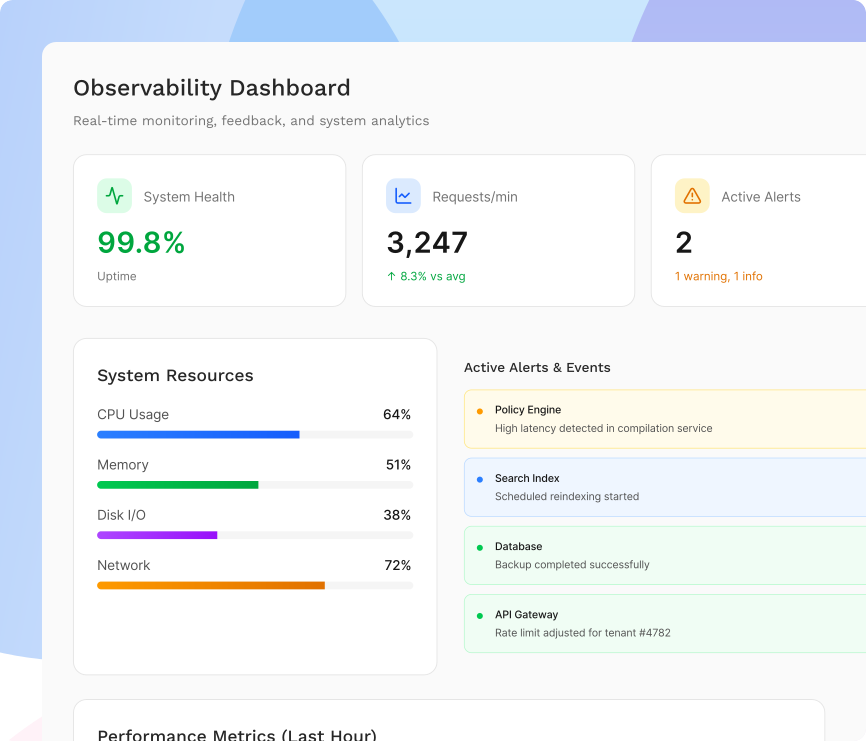
Evaluation & Observability
Regression Tooling
Compliance & Integrations

Plain-English business rules compile into deterministic execution paths with versioning, rollback, and instant retrieval of which policy governed any decision.

Classification, extraction, confidence routing across rotated pages, handwritten annotations, inconsistent layouts, and multi-entity packages.

Parallel agent orchestration, not sequential prompt chains. Execution graphs where independent analyses run simultaneously.

Embeddings, hybrid retrieval, context reuse, and agent memory across long-running workflows without hauling unnecessary context into every step.

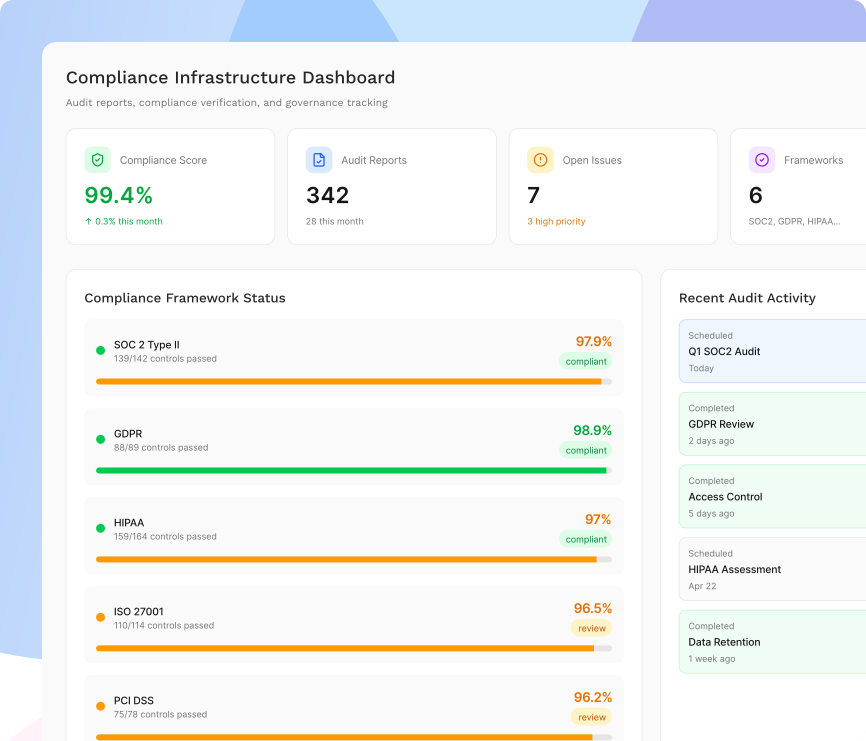
Decision traces and complete why-trails linking each decision to policy, evidence, and sign-off.

Backtesting, feedback loops, sandbox environments, and regression suites validating behavior across model upgrades.

Audit trails, review gates, pause and resume, regulatory reporting, confidence thresholds, and human escalation.
Policy EngineDocument IntelligenceCompiled ExecutionRetrieval & MemoryEvaluation & ObservabilityRegression ToolingCompliance & Integrations

THE MATH

That is 5-8 dedicated engineers.
12-18 months before you have production-grade tooling.

And you still will not have solved the hard problems. Gartner predicts over 40% of agentic AI projects will be canceled by the end of 2027 because of escalating costs, unclear business value, or inadequate risk controls. The issue is not weak teams. It is that production agent economics are consistently underestimated.

The Hidden Traps

The Maintenance Trap

Language models change quarterly. Each upgrade subtly alters behavior. MightyBot manages business rules as versioned policies and regression-tests every evaluation across model upgrades before production. You maintain code. We maintain a platform.

The Single-Workflow Trap

Internal builds are tightly coupled to the first workflow. When the second use case arrives, most infrastructure needs rebuilding. MightyBot separates concerns, so adding a use case means authoring policies, not re-engineering the platform.

TOKEN ECONOMICS

Why token efficiency changes the build-vs-buy math

In production, AI agent cost is not one prompt. It is the full chain: document ingestion, extraction, retrieval, policy evaluation, tool calls, validation, retries, exception routing, and audit logging. Sequential prompt chains can replay context and tool definitions at each step, so cost and latency compound as volume increases.

Annual LLM cost cases x steps x tokens x model price x retry factor
Model Production impact
Sequential prompt chains Repeated context replay, tool definitions, retries, and validation loops compound as volume grows.
MightyBot compiled execution Independent analyses run in parallel while deterministic policy paths execute outside expensive model calls where possible.
Production impact 4-5x more efficient token utilization, lower latency, and fewer runaway agent loops at scale.

ROI CALCULATOR

Run the build-vs-buy math with your own assumptions

Model engineering headcount, loaded FTE cost, timeline delay, architecture choice, token spend, maintenance, and 3-year TCO. The calculator is ungated; the full report is available after you enter contact details.

Open the calculator

INTEGRATION

Total Cost of Ownership

Build Internally

Cost Category Year 1 Years 2-3 (Annual)
Engineering team (5-8 senior) $1M - $2M $800K - $1.5M
LLM API costs (inefficient agents) $150K - $500K $200K - $600K
Cloud infrastructure $100K - $250K $120K - $300K
Data preparation & cleanup $200K - $400K $100K - $200K
Observability & monitoring $100K - $300K $100K - $300K
Security & compliance $150K - $300K $50K - $100K
Opportunity cost (12-18 mo delay) Significant
Total $1.7M - $3.75M $1.4M - $3M

Three-year TCO: $4.5M - $9.75M for a single workflow before opportunity cost. RAND reports that, by some estimates, more than 80% of AI projects fail - roughly twice the failure rate of non-AI IT projects.

Deploy MightyBot

Category Detail
Time to production 30 days
Implementation Included in onboarding
Ongoing policy management Internal team hours, not FTEs
Additional workflows Policy authoring, not re-engineering
The math is not close. 4-5x more efficient token utilization. 95% faster execution. 99%+ accuracy.

INTEGRATION

When Building Makes Sense

Building makes sense when the agent platform itself is strategic product IP and you are prepared to own every production layer indefinitely. Buying makes sense when the business workflow is strategic, but the agent infrastructure is undifferentiated heavy lifting.

Build internally when Buy MightyBot when
The agent platform itself is core product IP. The business outcome is core, but rebuilding agent infrastructure is not.
You can dedicate 5-8 senior engineers for 12-18 months. You need production results in weeks, with reusable infrastructure for the second workflow.
You need total ownership of every infrastructure layer. You need control over policies, thresholds, review gates, and integrations without owning every layer.
Your workflow is experimental, low-risk, or non-regulated. Your workflow is regulated, document-heavy, policy-bound, and audit-sensitive.
You are prepared to maintain evals, observability, model upgrades, security, and rollback indefinitely. You want policy execution, why-trails, and production governance built into the platform.

Skip the 18-month build.
Deploy in weeks.

Request a demo

FAQ

Frequently Asked Questions

How does MightyBot's deployment timeline compare to an internal build?

30 days versus 12-18 months. MightyBot's deployment covers policy configuration, system integration, document pipeline setup, and production go-live. An internal build requires 5-8 senior engineers for over a year — for one agent — assuming no architectural pivots.

How much does it cost to build an AI agent platform in-house?

The real cost is not the prototype. It is the full production stack: senior AI engineers, document processing, policy execution, integrations, evaluation, observability, security, compliance, model upgrades, and LLM usage. For one regulated workflow, the internal path often becomes a multi-year, multimillion-dollar operating commitment.

Why do production AI agents become expensive to run?

Production agents run chains of document ingestion, extraction, retrieval, policy evaluation, tool calls, validation, retries, exception routing, and audit logging. Sequential prompt chains can replay context and tool definitions at each step, so token cost and latency compound with volume.

How does MightyBot reduce token usage?

MightyBot compiles workflows into execution graphs. Independent analyses run in parallel, deterministic policies execute outside the model when possible, and expensive model calls are reserved for the work that needs them. That is how MightyBot achieves 4-5x more efficient token utilization on production agent workloads.

Can we start building internally and switch to MightyBot later?

Yes, but the longer you build, the harder the switch. Deploy MightyBot on your first workflow, then use production results to benchmark against the internal plan. The data tends to make the decision obvious.

What if we have unique requirements?

Unique requirements are usually unique policies, not unique infrastructure. Institution-specific rules are authored in plain English while the execution, audit, and document infrastructure stays the same.

Does MightyBot mean losing control of our AI strategy?

No. Your team controls policies, thresholds, escalation rules, and integration configuration. MightyBot controls the execution infrastructure so you do not have to rebuild it for every workflow.

How does MightyBot handle model upgrades?

An evaluation system validates agent behavior across model upgrades before anything reaches production. Every policy evaluation is regression-tested and every document pipeline is revalidated.