
Policy-Driven Automation for Financial Services
Policy-driven automation turns financial policies into executable AI workflows that process documents, enforce rules, and preserve evidence for every decision.
Blog
Policy-driven agents, document intelligence, and enterprise automation, from the team building it.
106 articles
Policy-driven automation turns financial policies into executable AI workflows that process documents, enforce rules, and preserve evidence for every decision.

AI governance defines how AI is built, deployed, monitored, and retired through executable policies, access controls, escalation, versioning, and audit trails.
Prove AI agent ROI in financial services by comparing cycle time, throughput, rework, compliance effort, and total workflow cost before and after deployment.

Deterministic policy enforcement means every AI agent decision applies the same versioned rules to the extracted inputs, so identical inputs under one policy version give the same check result and an audit record of the same structure.

Built Technologies uses AI agents to automate construction loan draw review with document intelligence, policy checks, evidence trails, and human oversight.

Policy-driven vs ReAct agents: compiled plans make regulated workflows predictable and auditable; runtime reasoning fits open-ended research and coding.

Policy-driven AI turns business rules, evidence requirements and human oversight into executable agent workflows that hold up in production.
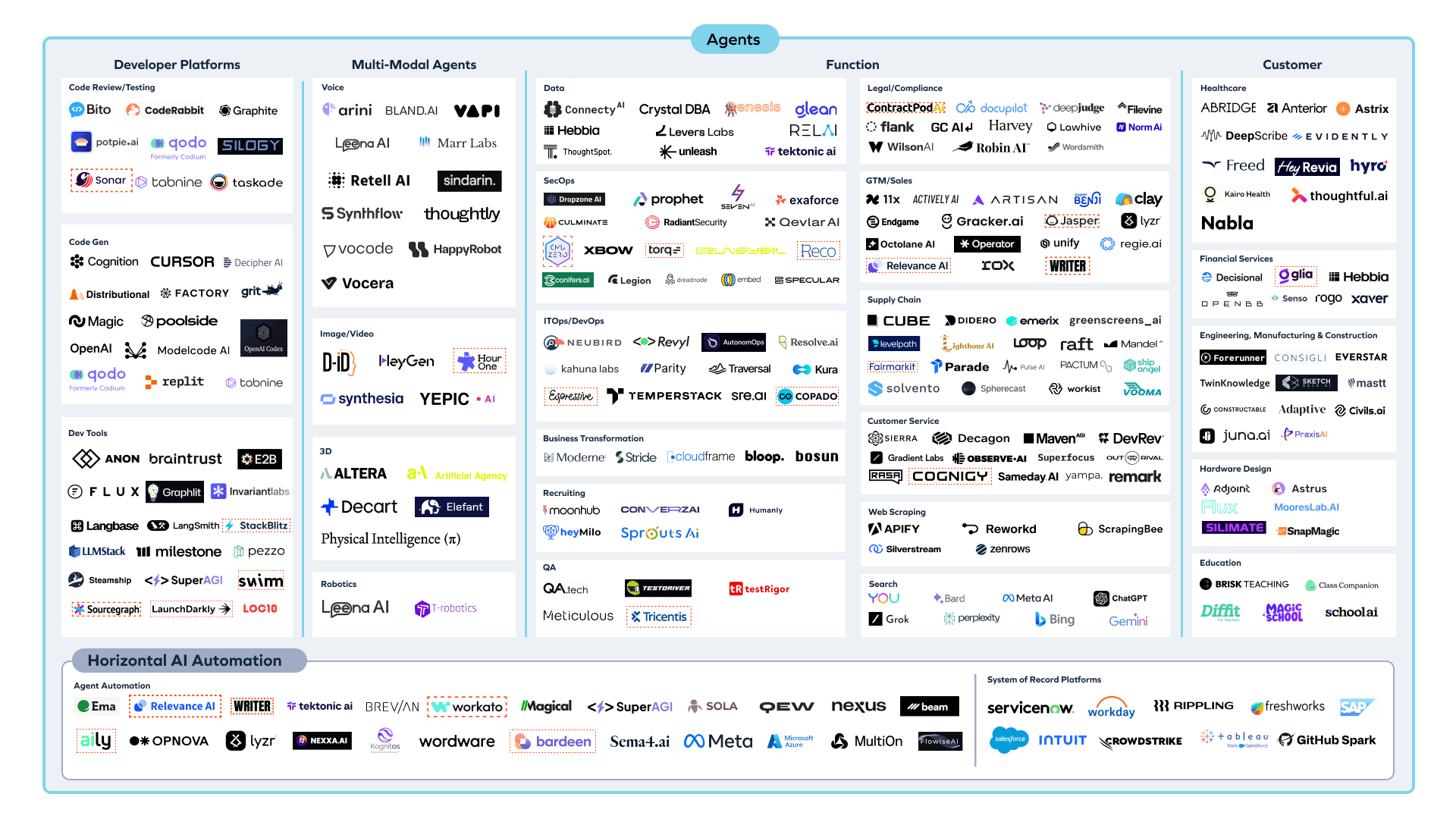
AI agent market map 2026: coding, workflow, vertical, browser, customer-service, infrastructure, and how to evaluate production-ready platforms.

The best AI coding agents in 2026, ranked on independent benchmarks: Claude Code with Opus 5.5 leads, then Codex, Cursor, Devin and more. Updated September 24.

Policy-driven automation compiles business rules into execution plans, while workflow builders require teams to maintain steps, branches, and exceptions.

A policy engine turns plain-English business rules into versioned, enforced logic for AI agents. How policy management and enforcement work, with an example.
Policy as code governs infrastructure checkpoints, while policy-driven automation compiles plain English business rules into auditable, end-to-end workflows.