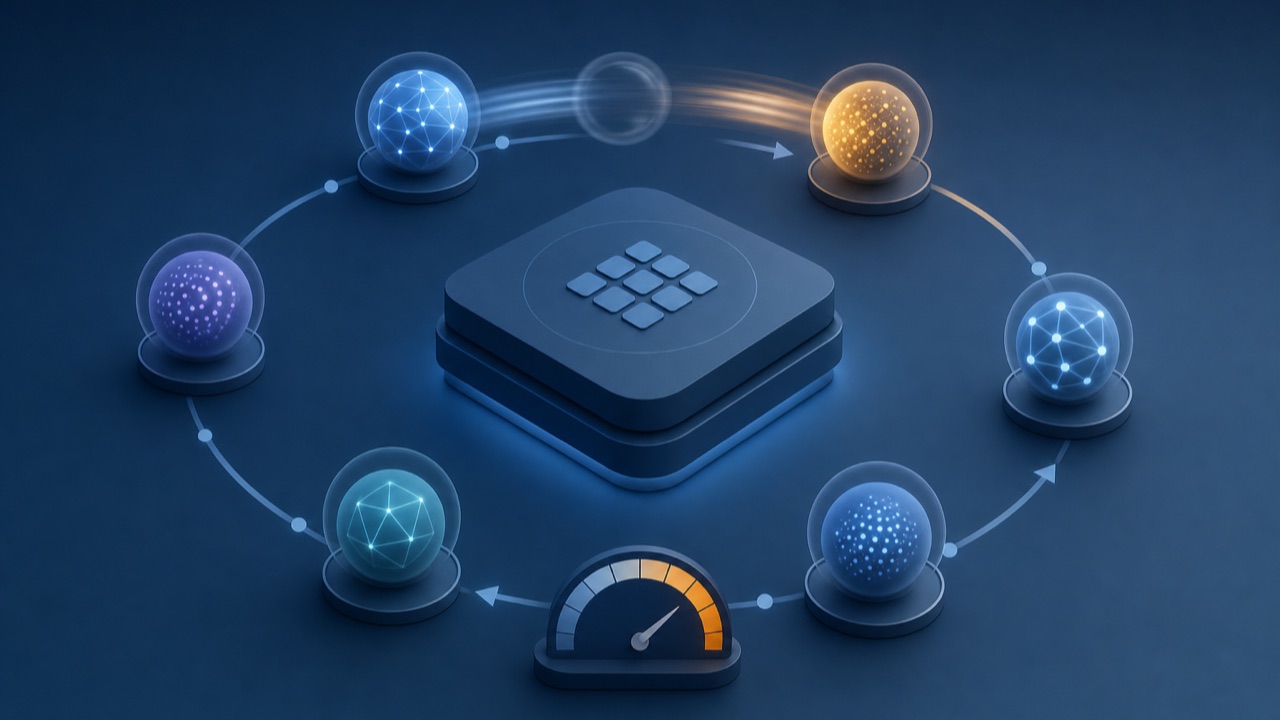
Summary: The drag-and-drop workflow builder is the most successful UI metaphor in enterprise automation, and its costs are structural, not cosmetic. In 2026, with every major vendor re-skinning the canvas for agents, the accounting deserves an update: what the canvas actually costs over three years, why LLM-filled nodes make the old problems worse, and what the compiled alternative changes. This extends our earlier analysis of policy-driven automation versus workflow builders.
The demo and the bill
Every canvas sells the same way: drag five boxes, connect them, run it live, applause. The demo is real. So is what happens next, and it compounds:
Branch explosion. The happy path is five boxes. Real workflows are the exceptions: the missing document, the failed validation, the timeout, the partial approval. Each becomes a branch, each branch needs its own error handling, and mature canvases run to hundreds of nodes that no one fully understands. The workflow did not get more complex; the representation did.
Change friction. A one-sentence policy change (“raise the variance threshold to 12% for counterparty X”) becomes a re-wiring session: find every affected node, edit conditions, test paths, redeploy. Multiply by every rule change in a regulated operation, and the canvas backlog becomes the operation’s real bottleneck. The people who know the rules file tickets; the people who own the canvas burn sprints.
Diagram drift. Under deadline, fixes go in wherever they fit: a patch node here, a hardcoded exception there. Within a year the diagram is a diagram of what the workflow used to be. In unregulated contexts that is technical debt; in regulated ones it is an attestation problem, because nobody can prove what the process actually enforces.
Agent nodes raise the stakes. The 2026 twist is an LLM inside the box, which upgrades each step’s capability and downgrades the whole flow’s predictability: stochastic steps inside a hand-wired graph, with reasoning-loop token costs ticking on every retry branch the designer remembered to draw, and silent failures on the ones they did not.
The three-year accounting
Price a canvas deployment honestly and the license is the small line. The real lines: the engineering FTEs who own the canvas (because after the first month, the business users the demo promised are filing tickets, not dragging nodes); the change backlog measured in weeks per policy revision; the parallel compliance project to reconstruct auditability the canvas does not produce; and duplicated flow variants per jurisdiction or counterparty, each drifting independently. The ROI calculator prices these paths side by side with measured token data.
Builders are the right tool below a complexity line: notifications, syncs, simple approvals. The line sits roughly where documents multiply, policies layer, and auditors attend. Regulated decision workflows live entirely above it.
The compiled alternative
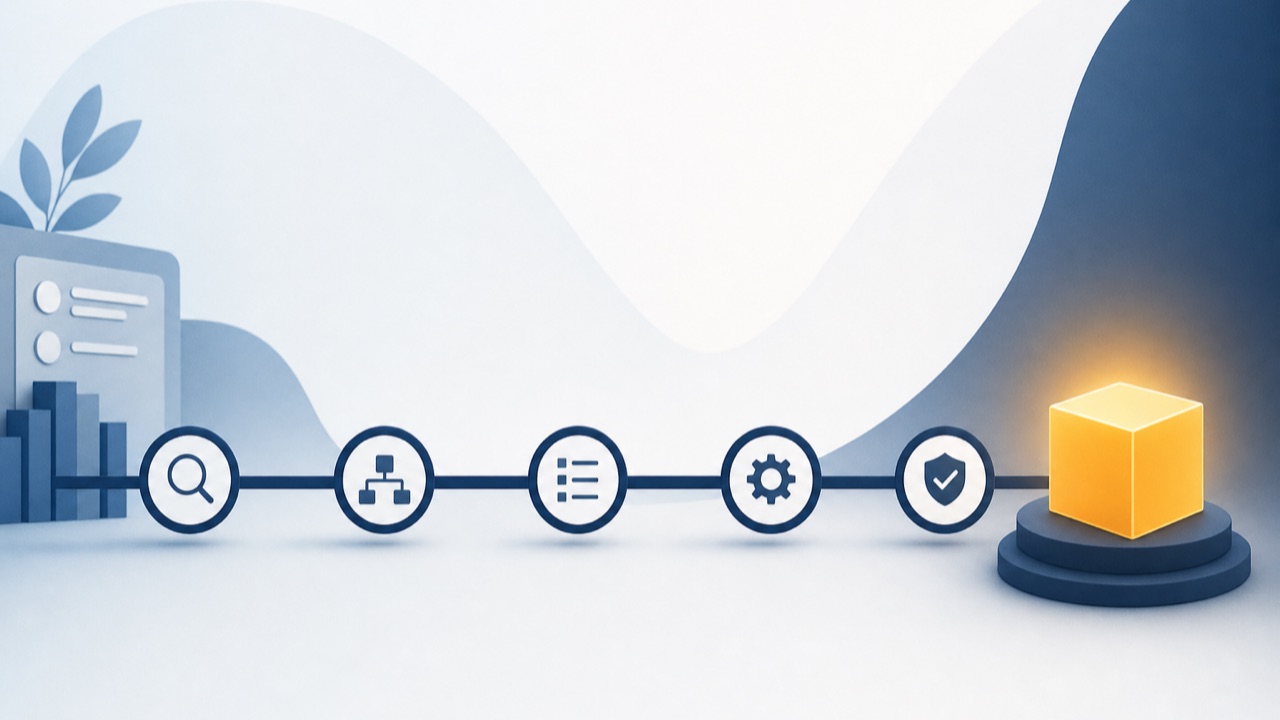
The alternative is not a better canvas. It is no canvas: describe the agent, provide the policies and documents that govern the work, and the platform compiles the workflow: schemas, steps, dependencies, exception routing, review gates. The properties reverse point by point:
- Exceptions are compiled into the plan, not drawn by hand, so coverage does not depend on a designer’s memory.
- A policy change is a text edit, backtested against history and deployed same-day, not a re-wiring session.
- The definition in Git is the production truth: human-readable, versioned, diffable, with nothing to drift.
- Regime variation is a profile, not a cloned flow.
The market map version of this argument, including where every major builder vendor sits, is in the 2026 Enterprise Agent Market Map; the head-to-heads live in the comparison library. The one-line version has not changed since March: the old way is over. Describe the work; the platform compiles the agent.