Summary: The construction draw review is a perfect storm of the things that kept regulated workflows manual: messy multi-document packages, policy that varies by budget line, evidence that includes photographs, and money that costs someone interest every day it waits. It is also where policy-driven agents proved themselves in production: at Built Technologies, MightyBot cut time on task by roughly 95% and accelerated draws to borrowers by up to 60%, across $100B+ in lending activity. Here is how the workflow actually runs.
What a draw review really is
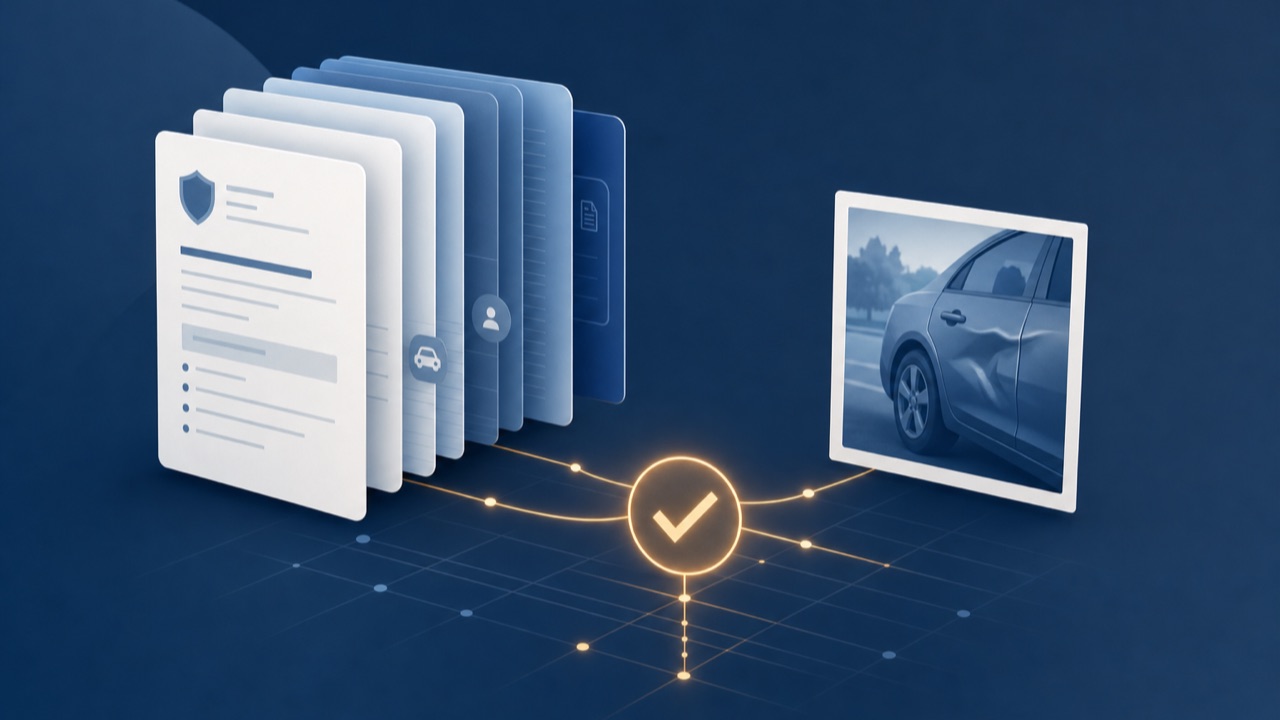
A contractor requests funds against a construction budget. Before money moves, someone must verify: the invoices match the budget lines drawn against; the lien waivers cover the payments; the inspection report supports the claimed completion; the photos show the work the report claims; and the running totals leave the budget solvent through completion.
Manually, that is an hour of skilled work spread across days of queue: five to nine documents per draw, none of them standardized, plus a site inspection PDF and a folder of phone photos. Multiply by hundreds of active projects and the draw queue becomes the operation’s bottleneck, and every day in it costs the borrower carry and the contractor cash flow. The speed economics are not a side benefit; in this workflow they are the product.
How the agent runs the review
Ingest and reconcile. The document pipeline classifies every page of the package (invoice, waiver, inspection, schedule), extracts values with page-and-character evidence pointers, and reconciles across sources: this invoice against that budget line, this waiver against that payment, running totals against remaining budget. Reconciliation, not extraction, is the hard part, and it is where generic document AI stops.
Evaluate policy.Plain-English policies encode the credit rules: variance thresholds per line, waiver requirements by draw size, inspection recency, contingency rules. Deterministic checks run as code; every evaluation records which rule fired on which value from which page. Lender-specific and state-specific variations live in profiles, not in cloned workflows.
Weigh the visual evidence. Inspection photos are first-class inputs: the platform checks that the image supports what the report claims (framing complete, roofing done) and flags mismatches with both artifacts side by side. In a workflow that has historically taken a site inspector’s word for it, visual-to-text alignment is the difference between documented and assumed.
Route by exception. Clean draws clear. Exceptions (a 12% variance where policy allows 10%, a missing waiver, a photo that does not match) arrive at a reviewer with the evidence already assembled and a why-trail under every determination. Reviewers spend their hour on the draws that need judgment, and autonomy expands per category as their edit data supports it.
The production evidence
This is not a pilot story. The Built deployment runs the pattern at scale in production: roughly 95% less time on task, draws to borrowers up to 60% faster, 99%+ decision accuracy, with the customer’s own engineering VP describing the integration as an AI exoskeleton for their existing platform: no re-architecture, existing systems of record intact.
That last point is the adoption story construction lending needs. The LOS stays the system of record; the agent adds an execution layer that reads, reconciles, evaluates, and documents through native integrations.
Where to start
Lenders evaluating this workflow can size it in an afternoon: draws per month, minutes per review, current turnaround days, and the carry rate on the portfolio, into the ROI calculator. For the broader lending stack (underwriting, covenant monitoring, servicing), the construction draw use case page and its siblings cover the map. Before a construction loan closes, DealScreen Construction screens the request itself, and BoardReady checks the closed loan before servicing starts.