
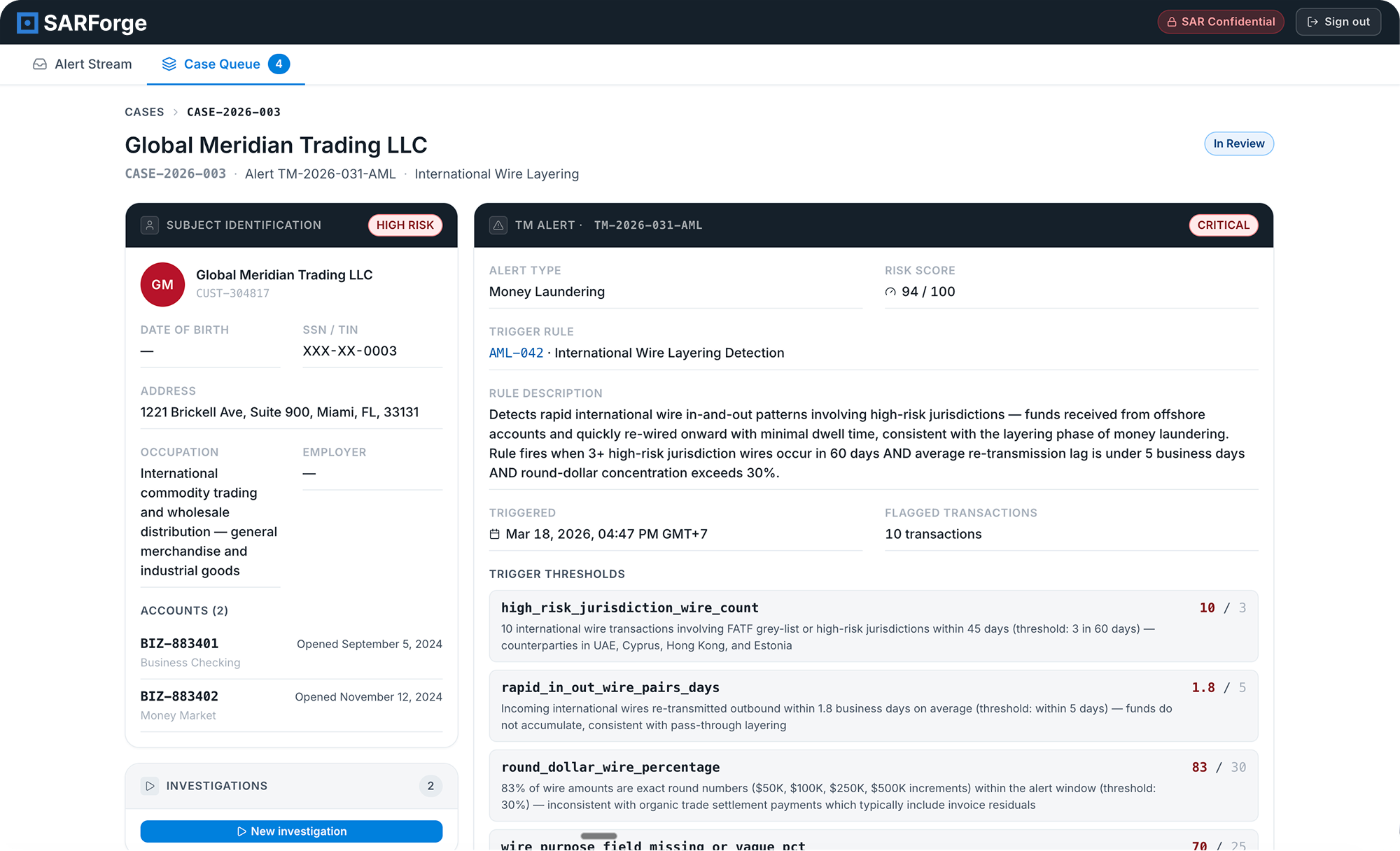
Case assembly
Pulls transaction history, KYC records, OFAC screening results, and prior SAR history from your transaction monitoring system, core banking, and KYC platform into a unified case file.
SARForge assembles case data from multiple banking systems, detects suspicious activity typologies, and drafts FinCEN-ready narratives where every claim traces to specific evidence. Cuts SAR drafting from 21 hours to 2.
Become a design partnerWhat It Does
Every SAR narrative claim links to the specific evidence that supports it. No more black-box assertions. No more 21-hour assembly marathons. No more typology gaps.
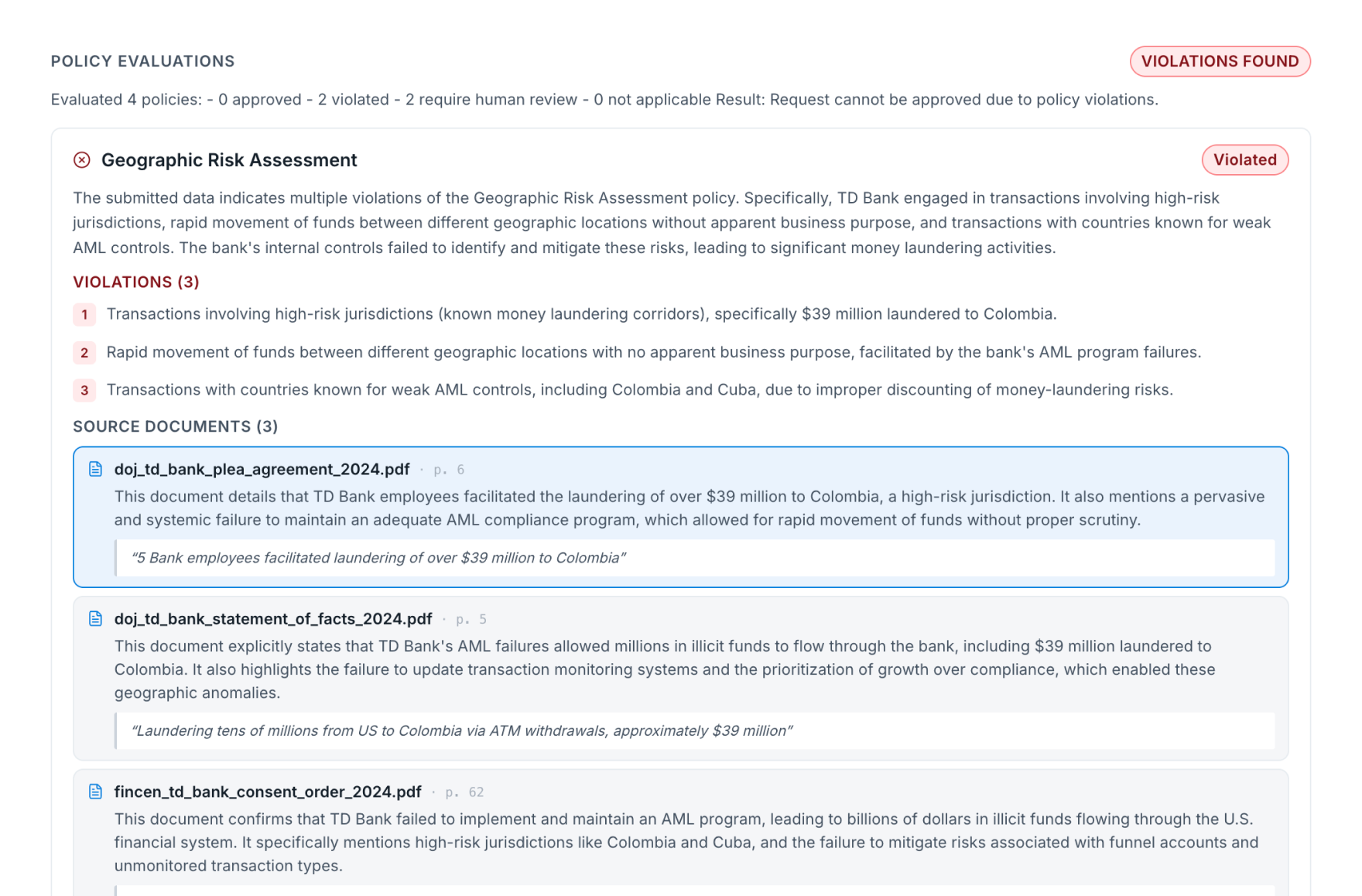
FinCEN examiners and federal prosecutors trace SAR narratives back to their evidence. If your analyst can't produce the underlying data, the SAR quality fails. SARForge makes attribution automatic — every sentence cites its source before the narrative leaves the draft queue.
Pulls transaction history, KYC records, OFAC screening results, and prior SAR history from your transaction monitoring system, core banking, and KYC platform into a unified case file.
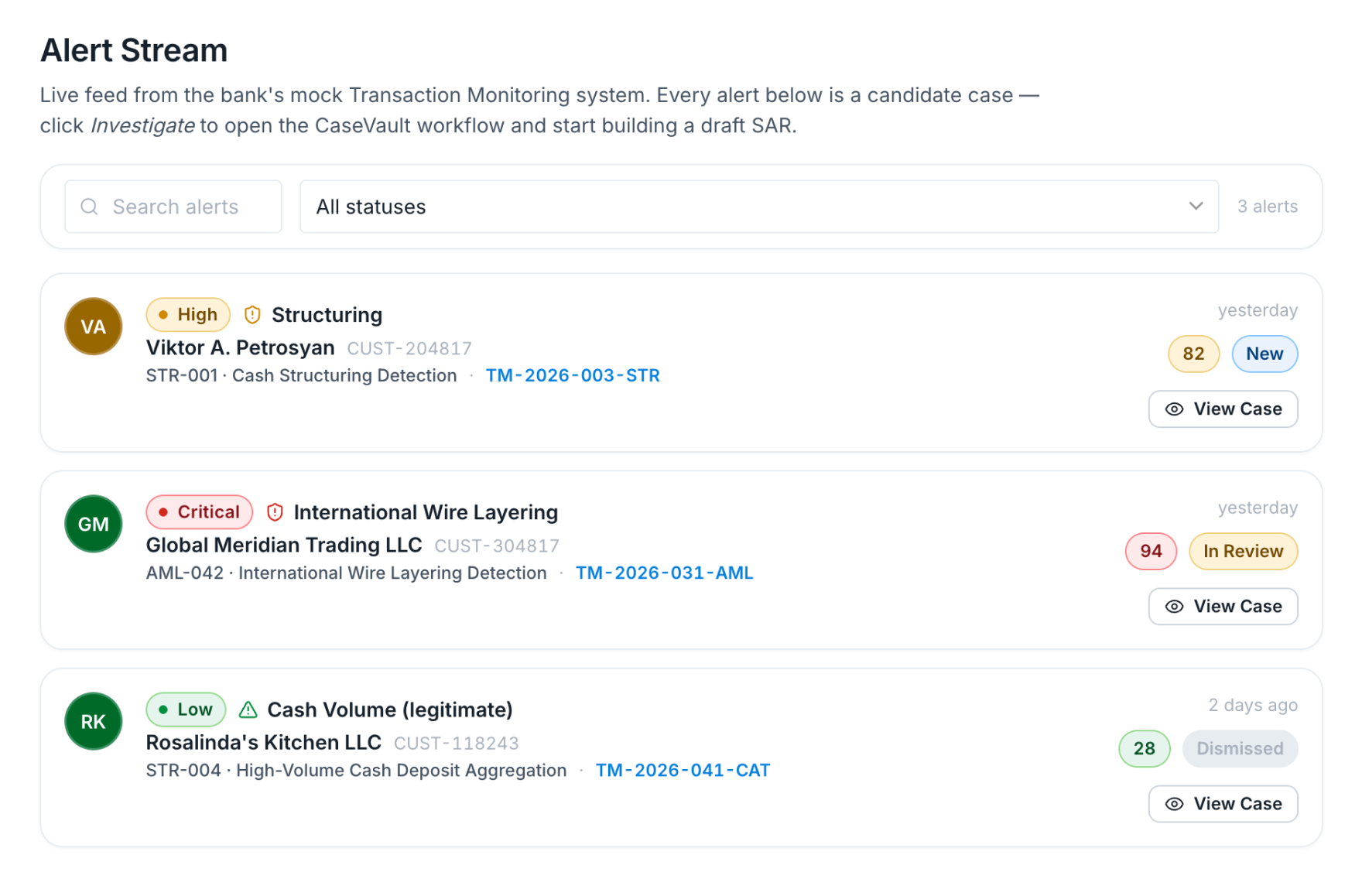
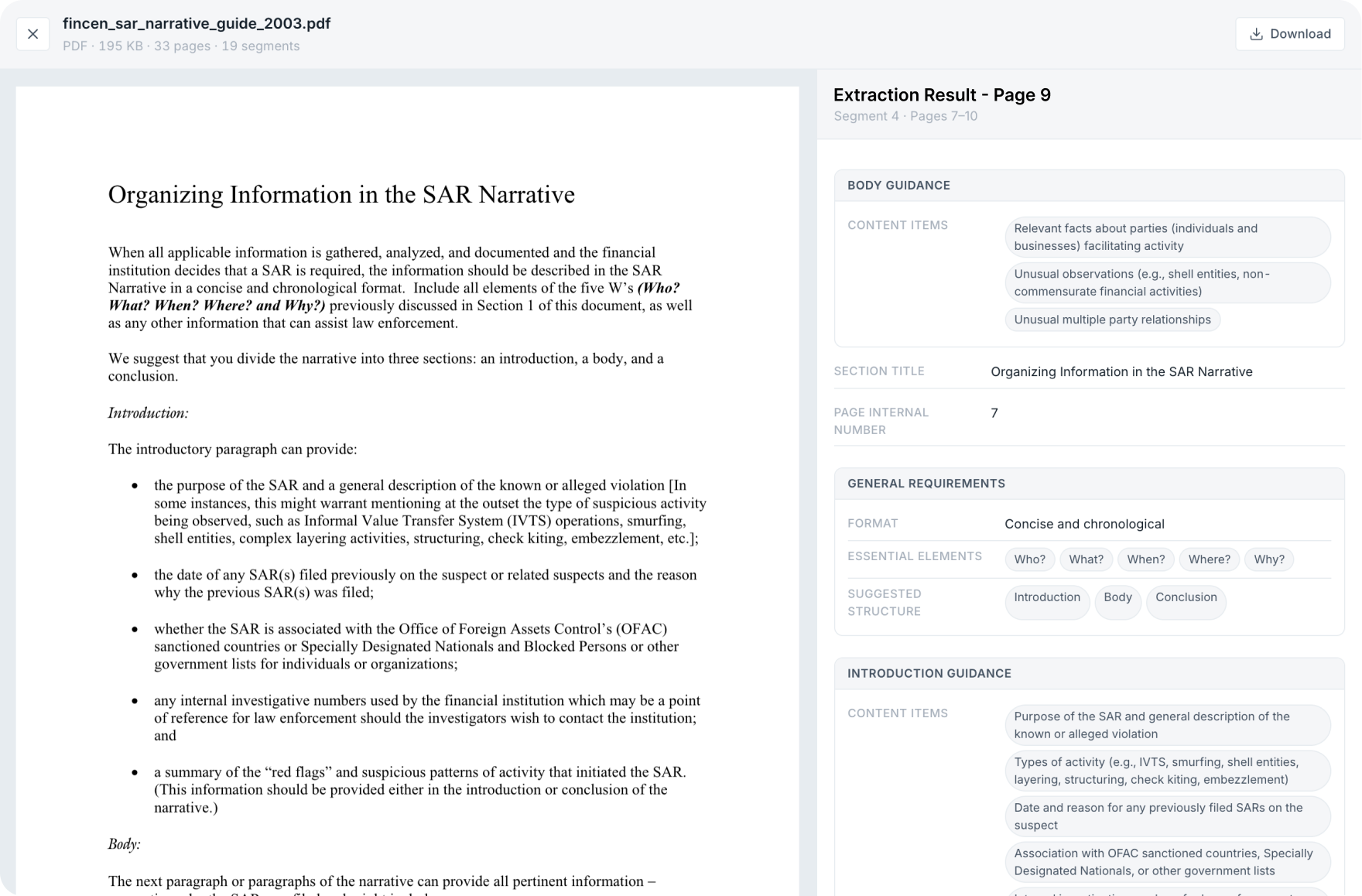
Analyzes assembled data, detects the suspicious activity type, and maps it to FinCEN's 28+ suspicious activity typologies. Structuring, layering, smurfing, insider fraud — each pattern identified and cited.
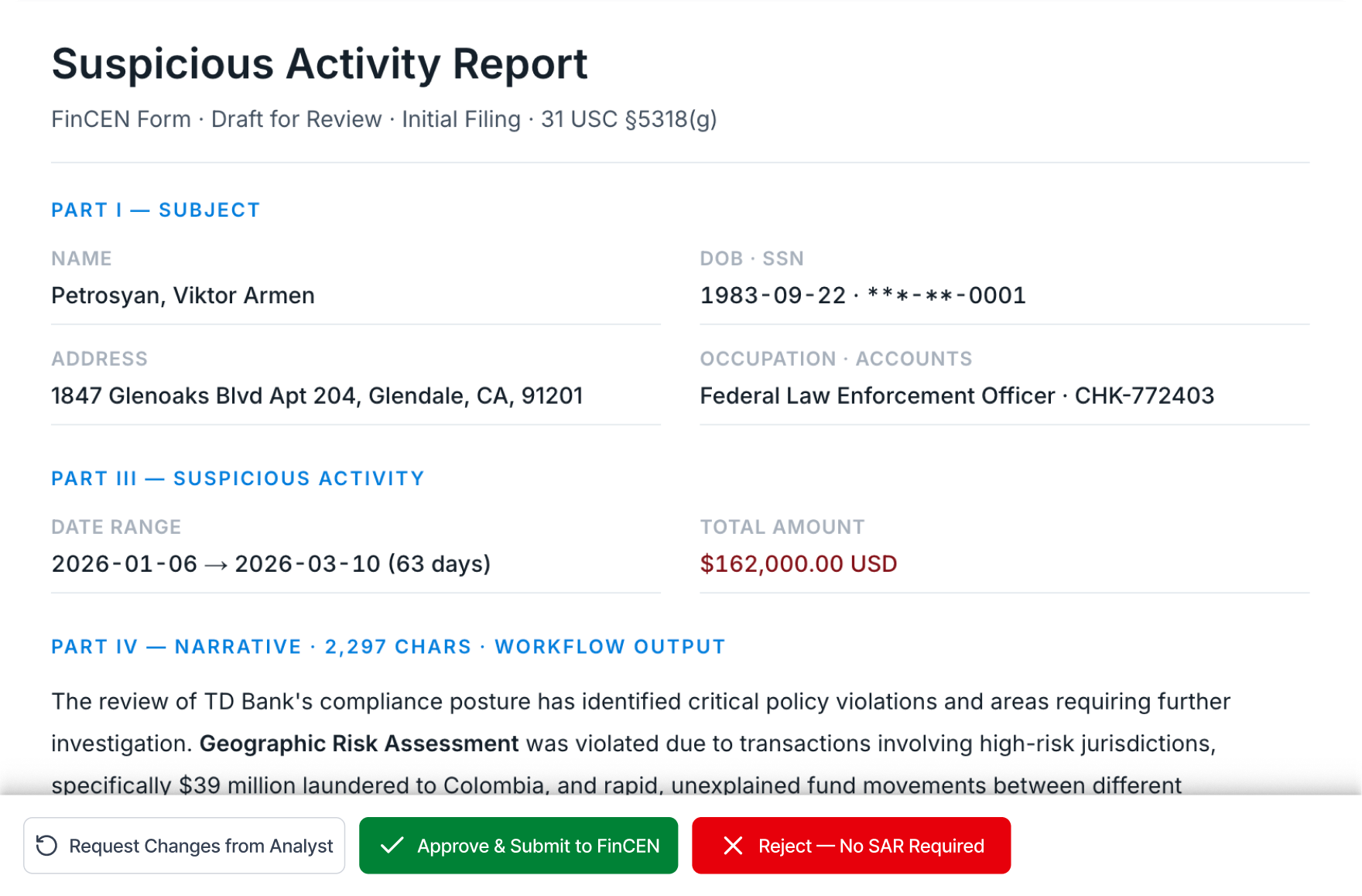
Drafts the SAR narrative where every claim links back to specific evidence: transaction IDs, dates, amounts, account numbers, and typology patterns. No black-box assertions.
Pre-populates Parts I–V of the FinCEN SAR form. Your BSA officer reviews, edits if needed, and files. SARForge never files — your team does.
BSA analysts spend the majority of their time gathering data, not analyzing suspicious activity. The result is narrative quality that varies by analyst, typology coverage that's inconsistent, and attribution that doesn't survive examiner scrutiny.
Analysts spend an average of 21.41 hours per SAR pulling data from 4-6 disconnected systems — transaction monitoring, core banking, KYC, OFAC — before writing a single word.
Narratives make claims without citations. Examiners ask where each statement came from. The analyst can't trace it. The SAR fails the quality review.
Inconsistent mapping of alerts to FinCEN's 28+ suspicious activity typologies produces SAR narratives that don't reflect the actual pattern — leaving the institution exposed.
FAQ
SARForge integrates with your transaction monitoring system (NICE Actimize, Verafin, Oracle FCCM), core banking, KYC platform, and OFAC screening tool via API. It assembles data from all sources into a unified case file before generating the narrative.
Your BSA officer files. SARForge generates the draft narrative with source attribution and pre-populates FinCEN form fields. Your team reviews, edits, approves, and submits through FinCEN's BSA E-Filing System.
Every factual claim in the narrative links to the specific evidence that supports it — transaction ID, date, amount, account number, or KYC record. If the narrative says "subject structured $9,800 deposits across 5 dates," it cites all 5 transactions.
SARForge detects all applicable typologies in the case data and maps each to the corresponding FinCEN category codes. The narrative addresses each typology with separate evidentiary support.
Yes. SARForge runs on SOC 2 Type II certified infrastructure. All case data is encrypted in transit and at rest. Access is logged and auditable.